
.webp?width=1180&height=550&name=LIDAR+AI+BIM%20(1180%20x%20550%20px).webp)
ai
Scan-to-BIM
AEC
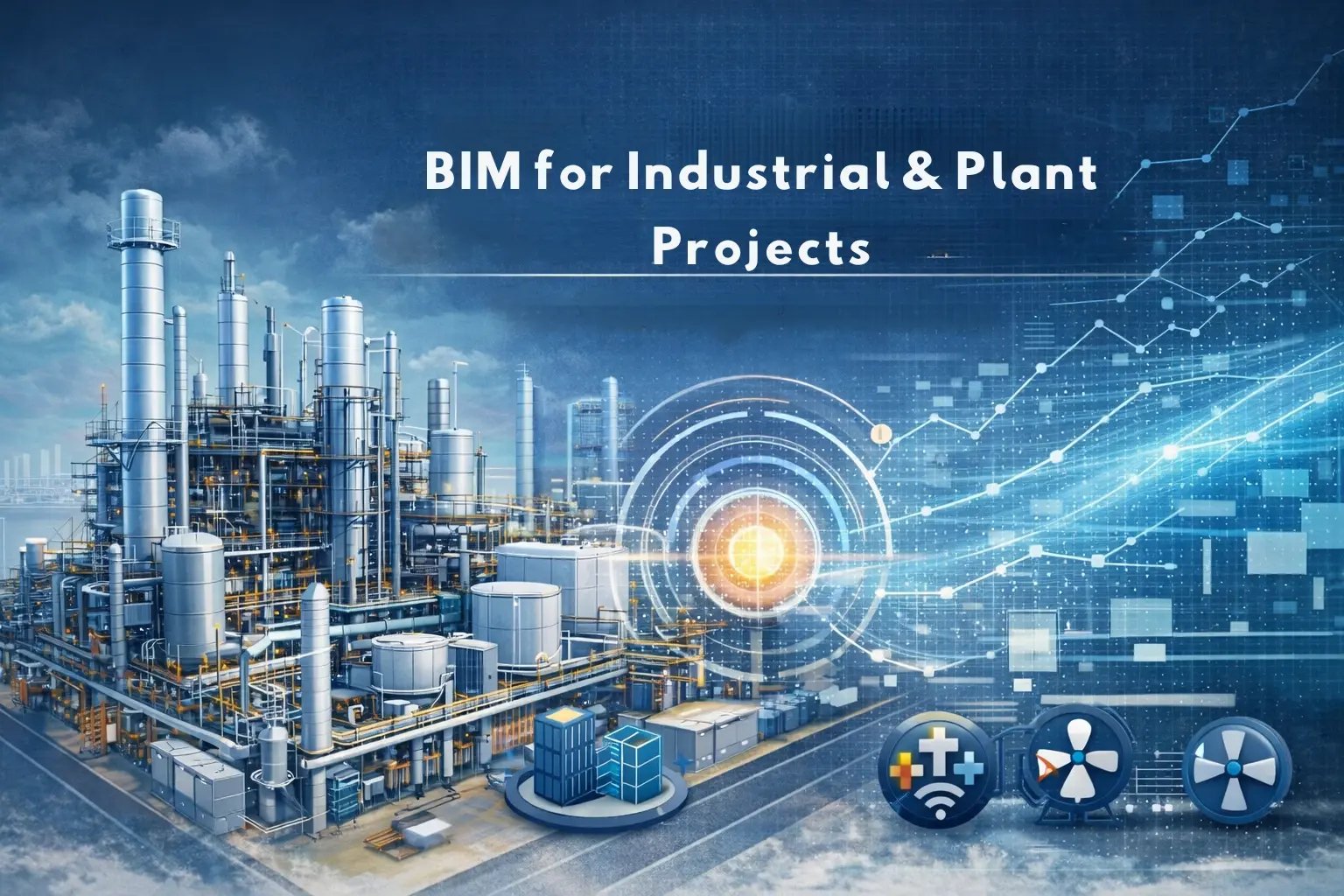

BIM for Industrial & Plant Projects has evolved far beyond 3D modeling. In 2026, it stands as a strategic digital backbone for industries such as oil & gas, chemicals, power generation, pharmaceuticals, mining, and advanced manufacturing.
Unlike conventional buildings, industrial plants operate under high-risk, high-value, and high-complexity conditions. When BIM is combined with Digital Twin platforms and CFD simulation, it becomes a powerful decision-making ecosystem—supporting safety, compliance, sustainability, and long-term operational excellence.
Industrial plants contain:
A single valve relocation can impact pressure, temperature, safety zones, and maintenance access. BIM provides a single source of truth, allowing teams to visualize cause-and-effect before execution.
Unlike commercial buildings, industrial facilities:
BIM supports the entire asset lifecycle, from FEED and EPC to operations, shutdowns, and decommissioning.
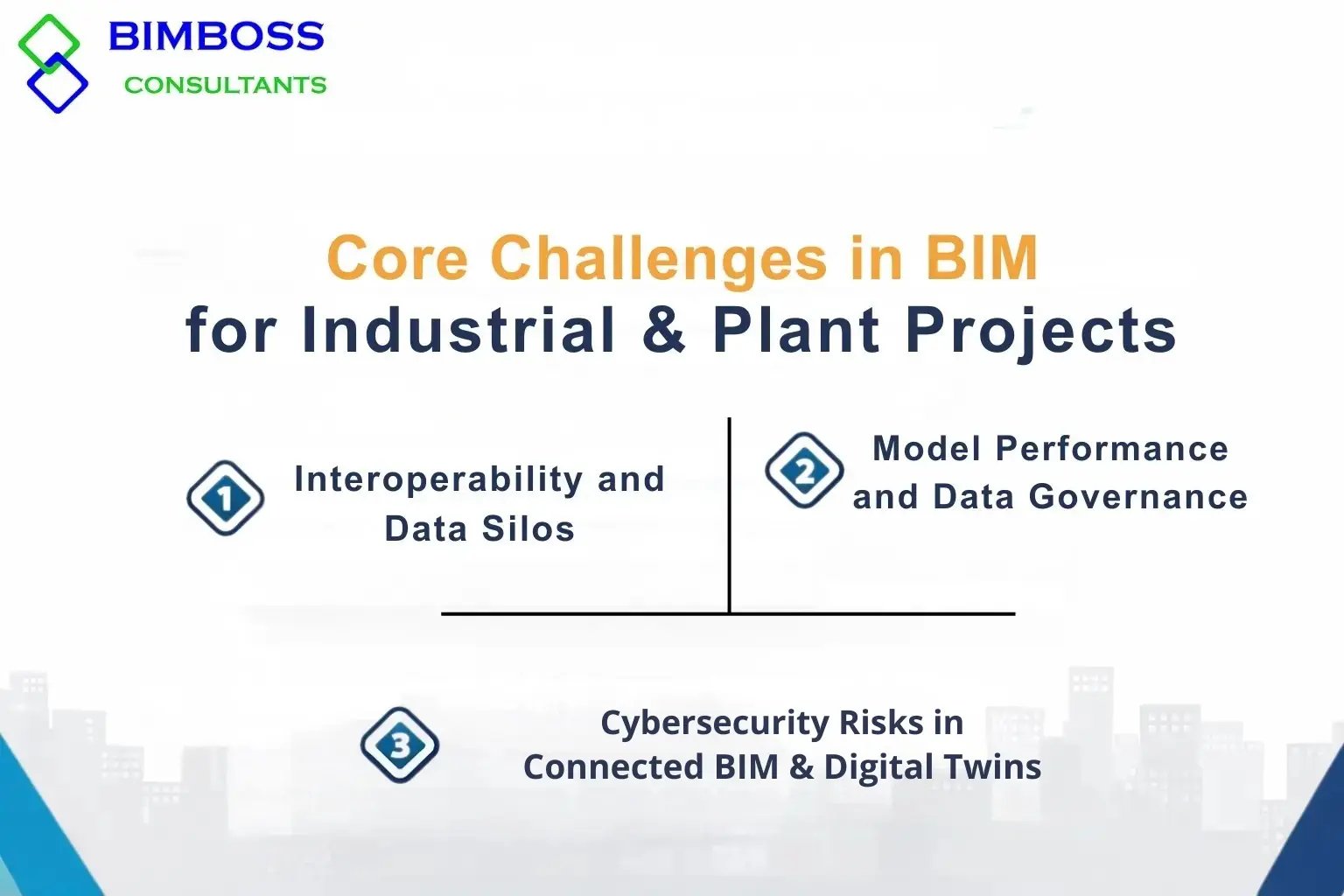
Engineering tools (AVEVA, Hexagon, Bentley, Autodesk) often use proprietary formats. Even in 2026, lossless data exchange remains a challenge despite IFC and ISO 15926 standards.
Large plant models can exceed billions of data points.
Without:
Performance degradation and data inconsistency become inevitable.
As BIM connects to:
Cybersecurity becomes a critical risk, especially for energy and chemical plants. Secure CDEs and zero-trust architecture are now essential.
BIM enables early identification of:
Eliminating hazards before construction is the most cost-effective safety strategy.
4D BIM links time with geometry, allowing teams to:
5D BIM adds cost intelligence, ensuring safety measures are budgeted, not compromised.
Advanced BIM models now include:
This significantly reduces operational incidents and downtime.
By 2026, Digital Twins enable:
This reduces unplanned shutdowns by up to 30–40% in mature implementations.
CFD integrated with BIM validates:
This is critical for ATEX and hazardous-area compliance.
CFD supports:
Aligning BIM workflows with ESG and sustainability goals is a major 2026 trend.
Clearly defining AIR ensures that every BIM element delivers the right data for operations, maintenance, and compliance. This prevents over-modeling and ensures long-term asset value beyond construction.
ISO 19650 provides a structured framework for managing information across the project lifecycle. It improves data reliability, accountability, and collaboration between owners, EPCs, and operators.
Federated BIM models allow each discipline to work independently while maintaining coordination. This approach improves performance, simplifies updates, and reduces risk in large, complex plant environments.
Early Digital Twin integration ensures BIM data flows seamlessly into operations. This enables real-time monitoring, predictive maintenance, and smarter operational decisions after handover.
CFD simulations validate airflow, gas dispersion, thermal conditions, and explosion risks. Integrating CFD with BIM enhances safety compliance and optimizes system performance before commissioning.
Cloud CDEs provide a single, secure platform for sharing BIM data across global teams. They enable real-time collaboration, version control, and audit-ready information management.
Involving O&M teams early ensures models reflect real operational needs. This improves maintainability, accessibility, and reduces costly modifications after project handover.
BIM models should support asset management, shutdown planning, and lifecycle maintenance. Operational-ready BIM maximizes long-term ROI and plant reliability.
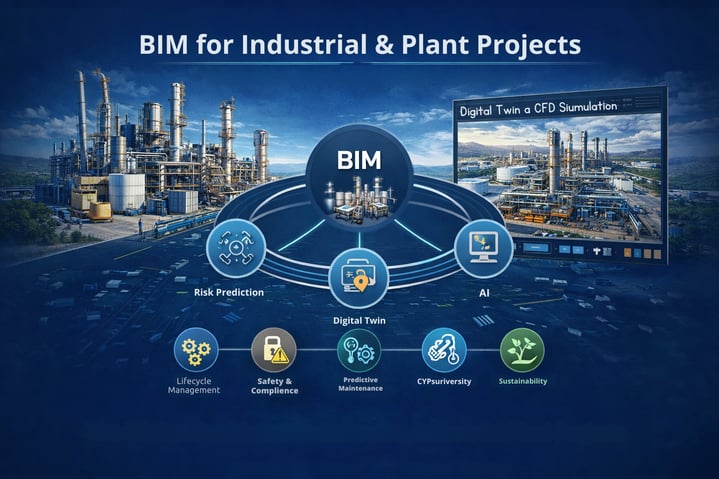
AI algorithms identify clashes, constructability issues, and safety risks earlier and faster than manual reviews. Predictive analytics further reduce rework and schedule delays.
Cloud-native platforms enable scalable, real-time collaboration and data integration. They support remote operations, advanced analytics, and continuous model updates.
Robots and autonomous systems use BIM and Digital Twin data to perform inspections in hazardous areas. This improves safety, reduces downtime, and enhances inspection accuracy.
LiDAR scanning and drones capture accurate as-built conditions and feed data back into BIM models. This keeps Digital Twins continuously aligned with real-world conditions.
BIM increasingly connects with smart production systems, automation, and digital manufacturing workflows. This alignment improves efficiency, traceability, and plant intelligence.
BIM supports energy modeling, carbon tracking, and lifecycle assessments. These capabilities help industrial facilities meet net-zero and ESG targets.
BIM for Industrial & Plant Projects, enhanced by Digital Twin technology and CFD simulation, is no longer optional—it is mission-critical. As industrial facilities grow more complex and safety expectations rise, BIM enables smarter decisions, safer operations, and resilient asset performance.
The future of industrial construction isn’t just built—it’s simulated, secured, and optimized with BIM.
Planning a complex industrial or plant project?
Get expert guidance on BIM implementation, safety simulation, and digital twin integration.
Talk to a BIM & Digital Twin Expert in Our BIMBOSS Consultants Team
AI and BIM: Driving Innovation in Construction
What is BIM? A Complete Guide for Architects, Engineers & Contractors
