
.webp?width=1180&height=550&name=LIDAR+AI+BIM%20(1180%20x%20550%20px).webp)
ai
Scan-to-BIM
AEC
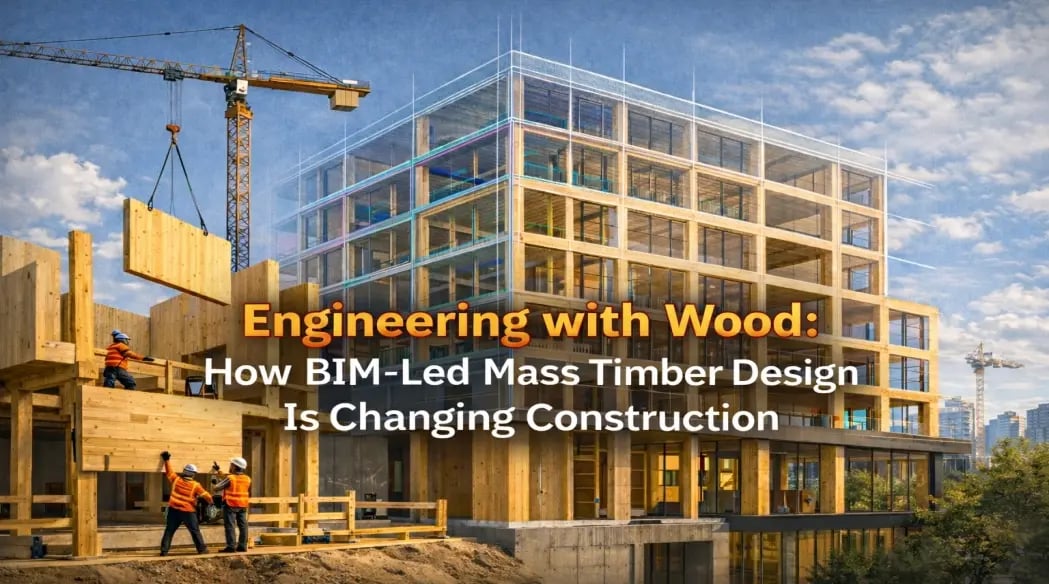

The global construction industry is changing in a big way. Engineered wood is driving this change instead of steel or concrete. Mass timber is rapidly emerging as a preferred structural solution for modern buildings, and when combined with Building Information Modeling (BIM), it is reshaping how projects are designed, coordinated, and delivered
From mid-rise commercial buildings to large schools and housing projects, BIM-based mass timber design is improving construction speed, long-term use, and building design flexibility.
Mass timber systems such as CLT (Cross-Laminated Timber), Glulam, LVL, and NLT offer a compelling alternative to traditional materials.
Key drivers behind mass timber adoption include:
Global push for low-carbon and sustainable construction
Faster project delivery compared to concrete and steel
Superior strength-to-weight ratio
Enhanced aesthetics and biophilic design appeal
Growing acceptance in building codes worldwide
As mass timber projects scale in complexity, BIM becomes essential to unlock their full potential.
Discover the power of BIM-led mass timber design—where Long-term use meets precision engineering
The adoption of mass timber construction powered by BIM is Growing fast as the global construction industry Focuses on Long-term use, speed, and digital precision.
Builders face more pressure to cut carbon, speed up timelines, and coordinate designs better. Because of this, many teams now choose BIM-led mass timber for modern construction.
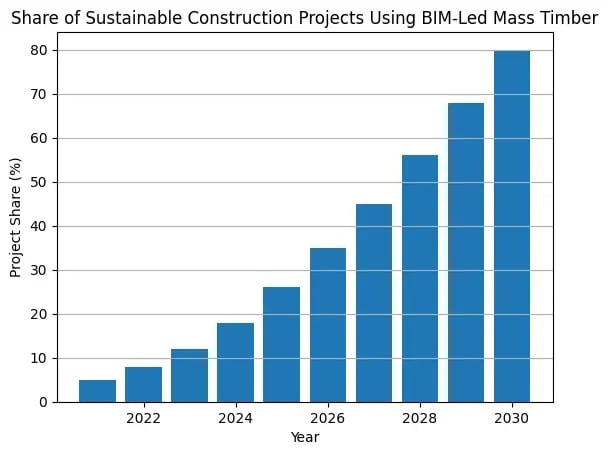
Recent industry trends indicate strong long-term growth for BIM-enabled mass timber construction, moving from projects into large-scale commercial, residential, and institutional developments.
Growth Drivers Include:
Long-term use regulations and net-zero building targets
Off-site manufacturing and Pre-made parts advantages
Increased acceptance of mass timber in building codes
BIM integration for clash detection, fabrication accuracy, and life-cycle analysis
By 2027, BIM-led mass timber adoption is expected to become mainstream, especially in green commercial developments, educational facilities, and public infrastructure projects worldwide.
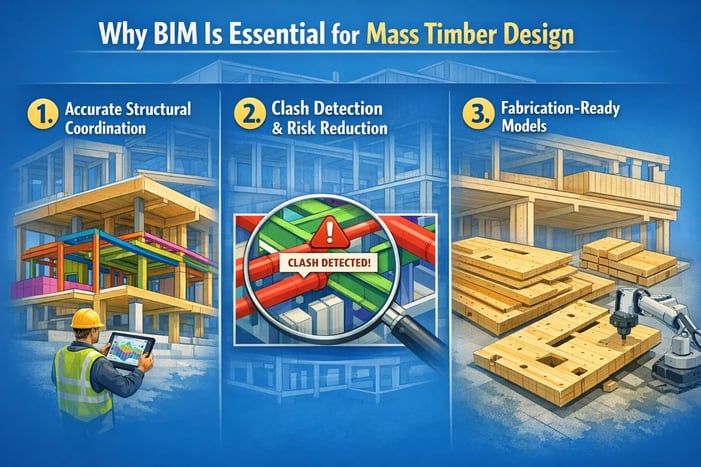 Mass timber structures rely on precision engineering, tight tolerances, and accurate fabrication data.
BIM allows engineers to model each timber element with exact detail, including connections, joints, fasteners, and how it connects with steel or concrete. This reduces coordination mistakes and prevents costly site changes.
Mass timber buildings involve complex MEP routing and hybrid systems. BIM-based clash detection identifies conflicts early, minimizing rework and construction delays.
BIM models can be directly integrated with CNC fabrication workflows, ensuring components are manufactured exactly as designed. This supports off-site Pre-made parts and lean construction strategies.
Long-term use is no longer optional—it’s a project requirement. BIM enhances the environmental advantages of mass timber by enabling:
Carbon impact analysis during early design stages
Optimized material usage and reduced waste
Life-cycle assessments (LCA) for greener decision-making
Efficient logistics and just-in-time delivery
With BIM, teams can quantify Long-term use outcomes instead of relying on assumptions.
At BIMBOSS CONSULTANTS, we deliver specialized BIM-based mass timber design and detailing services that align with global construction standards. Our expertise supports architects, engineers, and contractors across the USA and international markets.
Our services include:
BIM modeling for CLT, Glulam, and hybrid timber systems
Structural coordination and clash detection
Fabrication and shop drawing support
BIM-driven construct ability and sequencing analysis
Code-compliant and scalable design solutions
By ensuring precise design, long-lasting results, and smooth construction, we support teams in building next-generation timber projects.
As cities prioritize Long-term use and speed, mass timber combined with BIM will continue to gain momentum. This powerful pairing enables smarter engineering, cleaner construction, and digitally driven project delivery.
Engineering with wood is no longer experimental—it’s the future. BIM is the technology making it possible.
Ready to Build Smarter with Mass Timber? Partner with BIMBOSS CONSULTANTS to leverage BIM-led mass timber design solutions that deliver precision, performance, and Long-term use—project after project.
BIM-Led Hyperscale Data Centre Delivery: Powering Mission-Critical Infrastructure
AI-Assisted Renovation Planning with Scan-to-BIM: USA, UK & Canada
How BIM Helps in Smart Highway and Tunnel Projects
Integrating AI and Robotics in Modern Construction Projects: USA, UK & Canada
Top AI Trends Transforming BIM and Architecture in North America
