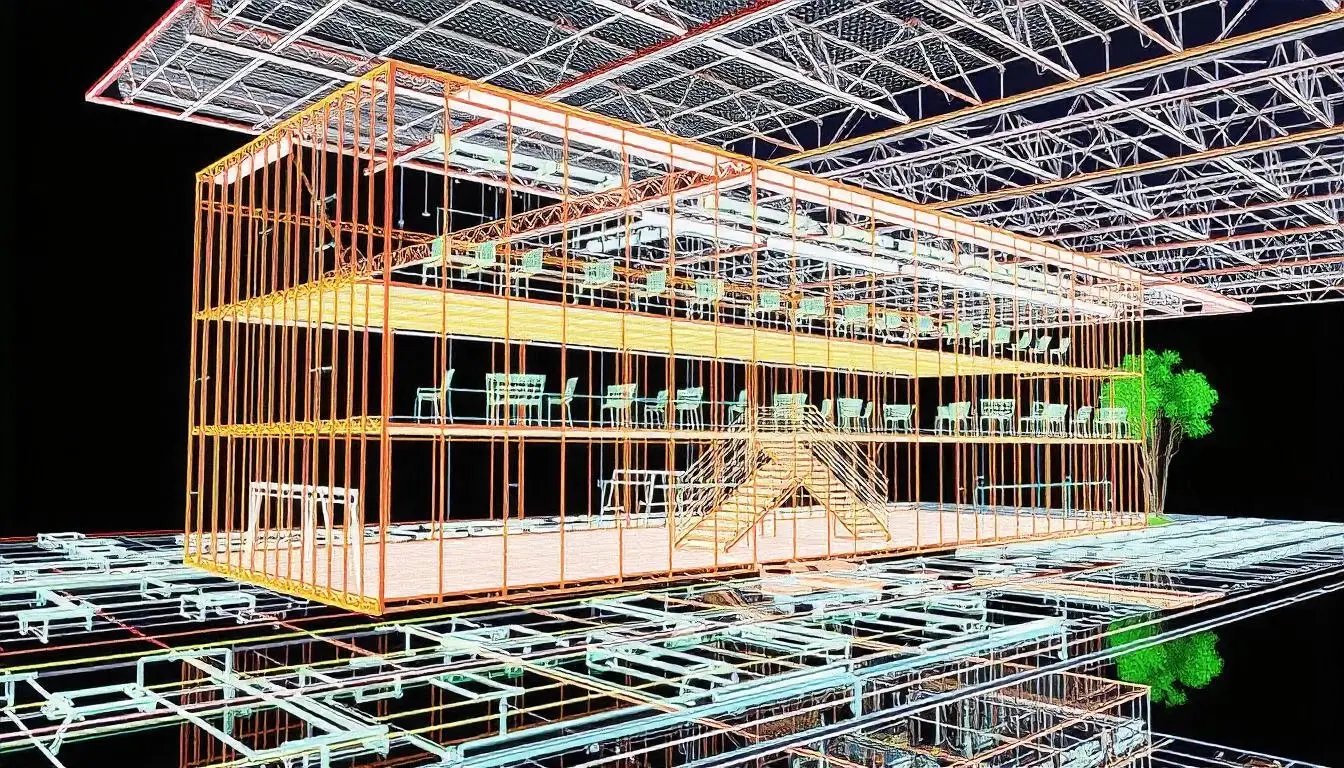
The Architecture, Engineering, and Construction (AEC) industry is undergoing its biggest digital transformation in history. In 2026, AI-powered BIM Modeling Services are redefining how architects design, visualize, collaborate, and deliver projects worldwide.
From automated clash detection and generative design to predictive analytics and digital twins — AI-enhanced BIM is no longer optional; it’s the new standard.
This blog explores how BIM Modeling Services work, why they matter more than ever, and how AI is elevating BIM into a fully automated, data-driven ecosystem for the future of construction.
What are BIM Modeling Services?
Building Information Modeling (BIM) is a 3D data-rich model representing the physical and functional characteristics of a building. But in 2025, BIM is no longer just “3D modeling.” AI has added intelligence, automation, and predictive insights into the entire BIM workflow.
These services include:
1. 3D Architectural Modeling
- Detailed geometry of walls, floors, roofs, spaces
- Accurate architectural layouts
- Parametric modeling for quick design changes
- Identifying conflicts between architectural, structural, and MEP components
- Avoids costly rework during construction
3. Quantity Take-offs (QTO)
- Auto-generated BOQ
- Materials, volumes, quantities for estimation
4. 4D BIM (Time)
- Construction sequencing
- Work breakdown structure (WBS)
- Phase simulations
5. 5D BIM (Cost)
- Cost-linked models
- Budget forecasting
- Real-time cost impacts
6. MEP BIM Modeling
How AI Is Transforming BIM Modeling Services
AI integration has turned BIM from a modeling tool into a smart decision-making ecosystem.
1. AI for Clash Detection & Model Checking
AI-powered systems detect design errors up to 35–50% faster than humans.
AI tools automatically:
- Identify clashes
- Suggest fixes
- Predict future conflicts
- Check model compliance with codes & standards
Tools used:
- Autodesk Construction Cloud AI
- Solibri AI
- Navisworks Automate
- Revit GPT plug-ins
2. Generative Design with AI
AI can generate hundreds of design alternatives in minutes based on:
- Cost
- Space utilization
- Aesthetics
- Structural efficiency
- Sustainability
- Energy performance
This helps architects find the most optimal design solution without manual iterations.
3. Automated Quantity Takeoffs (AI QTO)
Traditional QTO takes hours.
AI QTO takes seconds.
AI extracts:
- Material quantities
- Unit rates
- Cost variations
- BOQ sheets
- Predictive waste calculations
Tools:
- Buildots AI
- ALICE Technologies
- OpenSpace AI
4. Predictive Analytics for Scheduling & Cost
AI predicts:
- Delays
- Budget overruns
- Manpower shortages
- Equipment needs
- Risk zones
This gives construction teams proactive control over planning.
AI-driven digital twins simulate:
- Building performance
- HVAC energy loads
- Occupancy patterns
- Predictive maintenance
- Lifecycle forecasting
This boosts long-term operational efficiency.
Why BIM Modeling Services Are Crucial for Modern AEC Projects
AI + BIM offers benefits that traditional CAD workflows cannot match.
- Enhanced Collaboration and Communication:
BIM allows all stakeholders, including architects, engineers, contractors, and owners, to collaborate on a unified platform.
- Improved Accuracy and Efficiency:
BIM modeling services ensure that every detail of the project is meticulously planned and documented. This accuracy reduces the likelihood of costly rework and delays during the construction phase.
- Sustainability and Energy Efficiency:
BIM models can simulate energy performance, helping designers create more sustainable buildings. This aligns with the growing demand for green building practices.
- Lifecycle Management:
BIM doesn’t stop at the construction phase. It provides valuable data for the ongoing maintenance and management of the building throughout its lifecycle.
Why Outsource BIM Modeling Services?
Outsourcing BIM is now a global trend because in-house BIM teams are expensive and slow to scale.
1. Cost-Effective
Avoid:
- Software subscription costs
- High-end hardware
- Training costs
Outsourcing reduces BIM expenses by 40–60%.
2. Access to BIM Specialists
BIM outsourcing companies offer:
- Architectural modelers
- Structural engineers
- MEP experts
- AI automation specialists
All available in one team
3. Faster Turnaround Time
A dedicated BIM outsourcing team delivers:
- Faster modeling
- Quick revisions
- 24/7 production
AI in BIM Modeling: Key Trends for 2026 & Beyond
| Trend |
Benefit |
Impact |
| AI Automation |
Faster clash detection |
50% faster modeling |
| Digital Twins |
Predictive maintenance |
25% cost reduction |
| Generative AI |
Rapid design alternatives |
40% improved efficiency |
| IoT + BIM |
Real-time data feedback |
Optimized building performance |
| Power BI Integration |
Visual dashboards |
Better decision-making |
Real-World Applications of BIM Modeling Services
BIM modeling services are being used in a wide range of projects across various sectors. Here are a few examples:
- Commercial Buildings: BIM is widely used in the design and construction of commercial buildings, ensuring that projects are completed on time and within budget.
- Healthcare Facilities: BIM helps in the complex design and construction of healthcare facilities, where precision and adherence to regulations are critical.
- Infrastructure Projects: From bridges to highways, BIM is instrumental in the planning and execution of large-scale infrastructure projects.
- Residential Buildings: BIM modeling services are increasingly being used in residential projects to enhance design efficiency and sustainability.
The Future of BIM and the Role of Outsourcing
As the AEC industry continues to evolve, the role of BIM will only grow in importance. BIM is expected to integrate more closely with emerging technologies such as artificial intelligence (AI), the Internet of Things (IoT), and augmented reality (AR), further enhancing its capabilities.
Outsourcing BIM modeling services will remain a strategic advantage for companies looking to stay competitive in this rapidly changing landscape.
Conclusion
BIM modeling services are transforming the way we approach construction projects, offering unprecedented levels of accuracy, efficiency, and collaboration.
By outsourcing, you gain access to specialized expertise, cutting-edge technology, and the flexibility to scale your operations as needed.
If you’re ready to take your construction projects to the next level, consider exploring the benefits of BIM modeling services and find the right outsourcing partner to help you achieve your goals.
Explore -
Guide to BIM Modeling in Revit
How to Create a BIM Model
What Are the Benefits of BIM Outsourcing Services
What is BIM? A Complete Guide for Architects, Engineers & Contractors

.webp?width=1180&height=550&name=LIDAR+AI+BIM%20(1180%20x%20550%20px).webp)