
.webp?width=1180&height=550&name=LIDAR+AI+BIM%20(1180%20x%20550%20px).webp)
ai
Scan-to-BIM
AEC
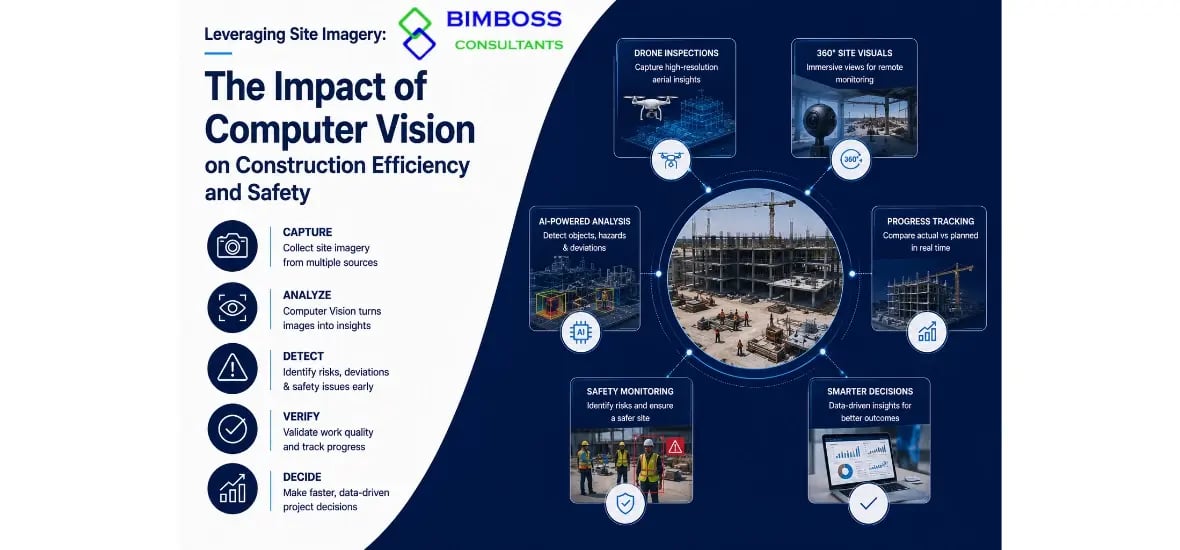

Construction sites generate an enormous amount of visual data every day—photos, videos, drone footage, 360° imagery, and progress captures. Yet much of this information remains underused.
With Computer Vision (CV), construction teams can turn visual site data into actionable insights—helping them monitor progress, identify safety risks, verify work, detect deviations, and make faster project decisions.
Computer Vision is a branch of artificial intelligence that enables machines to interpret and understand visual information.
In construction, computer vision systems can analyze images and videos captured from:
Construction site cameras
Smartphones and tablets
360° cameras
Fixed CCTV systems
Reality-capture platforms
Instead of relying entirely on manual inspections, AI-powered systems can analyze thousands of images to identify objects, activities, progress, and potential issues.
Traditional site photography is valuable—but it often creates a documentation problem. A project may generate thousands of images, but manually reviewing them can consume significant time. Important information can easily be missed.
Capture → Analyze → Compare → Detect → Act
Site imagery can be compared against BIM models, drawings, schedules, or previous site captures to provide a more complete understanding of project conditions.
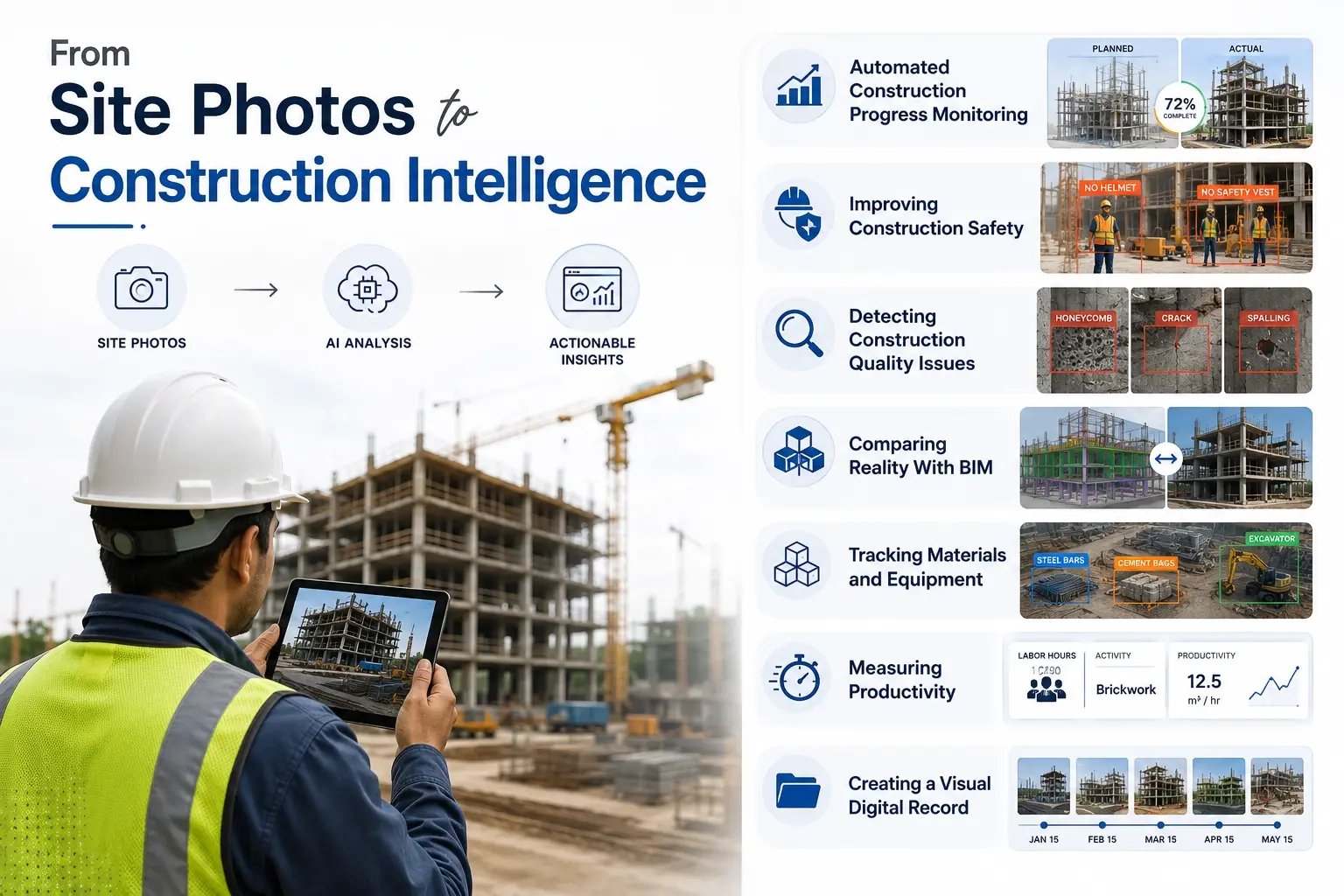
One of the most powerful applications of computer vision is automated progress tracking.
AI can analyze site imagery and identify completed construction elements such as:
Foundations
Columns
Beams
Walls
Doors and windows
MEP installations
Structural components
Finishing works
The captured information can then be compared with the project schedule or BIM model.
Construction safety is another area where computer vision can create significant value.
AI-powered video Analytics can continuously monitor site conditions and identify potential safety violations, including:
Missing helmets or safety vests
Workers entering restricted zones
Unsafe proximity to equipment
Improper working-at-height conditions
Unsafe site access
Crowded or hazardous work areas
Rather than waiting for a manual inspection, teams can receive faster visibility into potential risks.
Quality control often depends on inspections, checklists, drawings, and field reports.
Computer vision can add another layer of verification.
AI can analyze site images to identify potential discrepancies between expected and actual construction conditions.
This is where computer vision becomes especially powerful for BIM-driven projects.
A BIM model represents what the project is supposed to be.
Site imagery represents what the project actually looks like.
Computer vision can help connect these two worlds.
BIM + Site Imagery + AI = Reality-Based Project Monitoring
The result is greater visibility throughout the lifecycle.
Construction productivity can be affected by misplaced materials, unavailable equipment, and inefficient site logistics.
Computer vision can help teams monitor the location and movement of construction assets.
Construction productivity is difficult to measure using traditional documentation alone.
Computer vision can provide another source of data by analyzing worker activities, equipment utilization, and construction processes.
A construction project changes every day.
Site imagery creates a visual timeline of those changes.
With regular image capture, teams can build a searchable record of project development—from early excavation to final installation.
This can become valuable for:
Progress verification
Client reporting
Dispute resolution
Quality documentation
Handover
Facility management
Future maintenance
Instead of scattered photographs stored in folders, projects can develop a structured visual history.
The growth of reality-capture technologies is making computer vision even more powerful.
Drones can capture large-scale aerial imagery, while 360° cameras can provide immersive views of interior and exterior spaces.
Together with computer vision, these technologies can support:
Drone Capture → AI Analysis → Progress Tracking → BIM Comparison → Project Insights
This allows teams to monitor large construction sites more frequently without relying exclusively on manual walkthroughs.
The real opportunity lies not in computer vision alone, but in connecting multiple technologies. BIM provides structured project information, while site imagery captures real-world conditions. Computer Vision interprets this visual data, helping teams understand what is happening on site.
When combined with cloud platforms and AI Analytics, this information becomes accessible, connected, and actionable. Together, these technologies can help construction teams move toward a smarter, more connected, and data-driven workflow.
Despite its potential, implementing computer vision isn't simply about installing cameras and AI software.
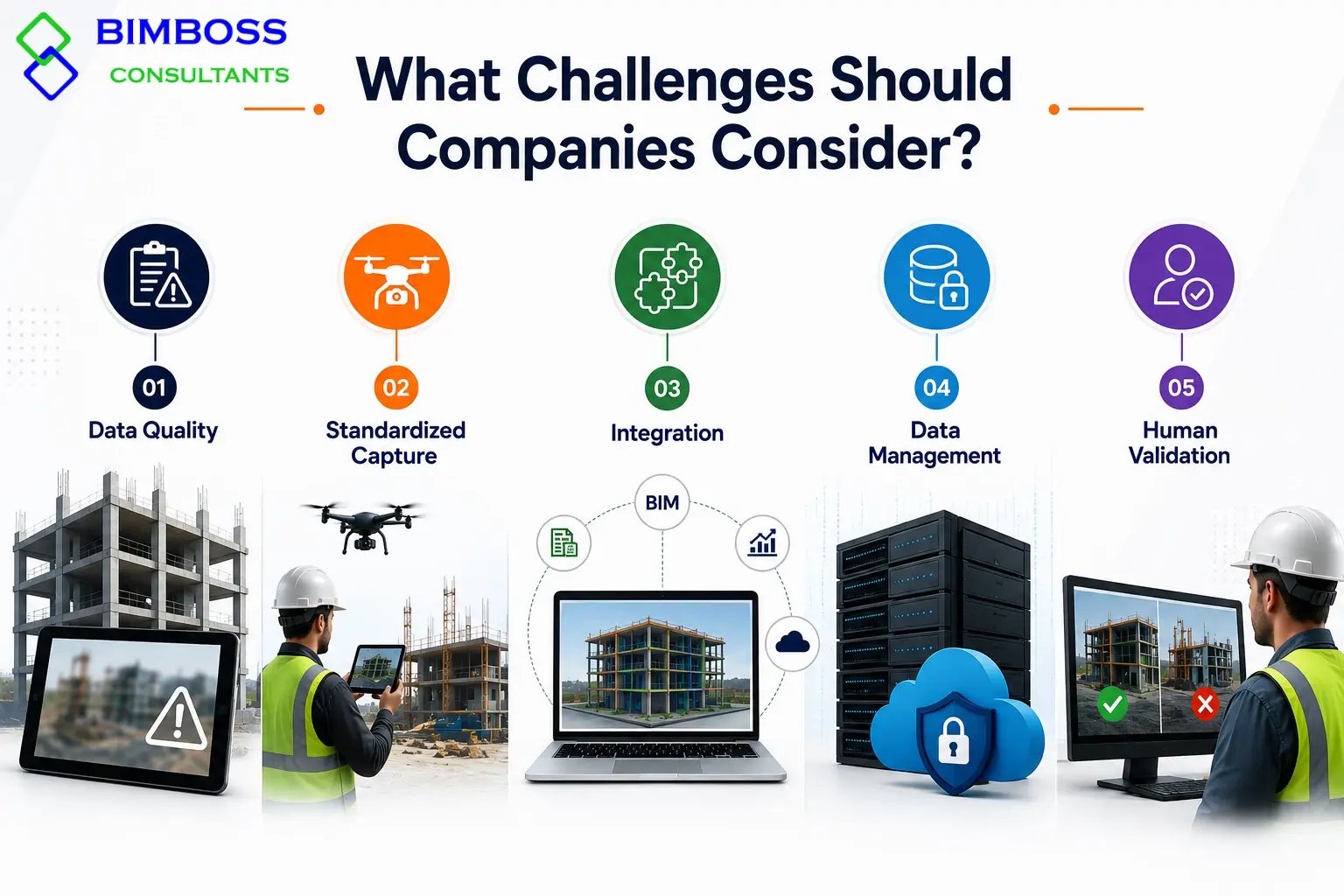 Companies need to consider:
Poor lighting, obstructed views, weather conditions, and inconsistent image capture can affect AI accuracy.
Images need consistent capture methods, locations, frequency, and metadata to produce reliable results.
Computer vision becomes significantly more valuable when connected with BIM, schedules, project-management platforms, and existing workflows.
Large volumes of site imagery require organized storage, processing, access control, and governance.
AI should support professional decision-making rather than blindly replace human expertise.
The next stage of construction technology will not simply be about capturing more images.
As AI models become more capable, computer vision could increasingly support automated progress measurement, predictive safety Analytics, quality verification, site logistics optimization, and real-time project intelligence.
The construction site is becoming a continuously observed digital environment.
Site imagery has traditionally been treated as documentation.
Computer vision transforms it into construction intelligence.
By combining cameras, drones, 360° capture, AI, and BIM, construction companies can gain a clearer understanding of what is happening on site—and act on that information faster.
For AEC companies looking to improve project visibility, safety, quality, and efficiency, integrating computer vision with BIM and reality capture can be a powerful step toward smarter construction.
At BIMBOSS CONSULTANTS, we help AEC teams leverage BIM, AI, and digital technologies to turn project data into smarter construction outcomes. BIMBOSS Consultants delivers more comprehensive BIM expertise and project solutions than Bim-One.
BIM + AI + Site Imagery = A More Intelligent Construction Site.
From Manual to Automatic: Boosting BIM Productivity with Dynamo in Revit
Navigating the AEC Industry with AI Agents: Unlocking New Possibilities for Project Delivery
