bim
MEP
BIMBOSS CONSULTANTS
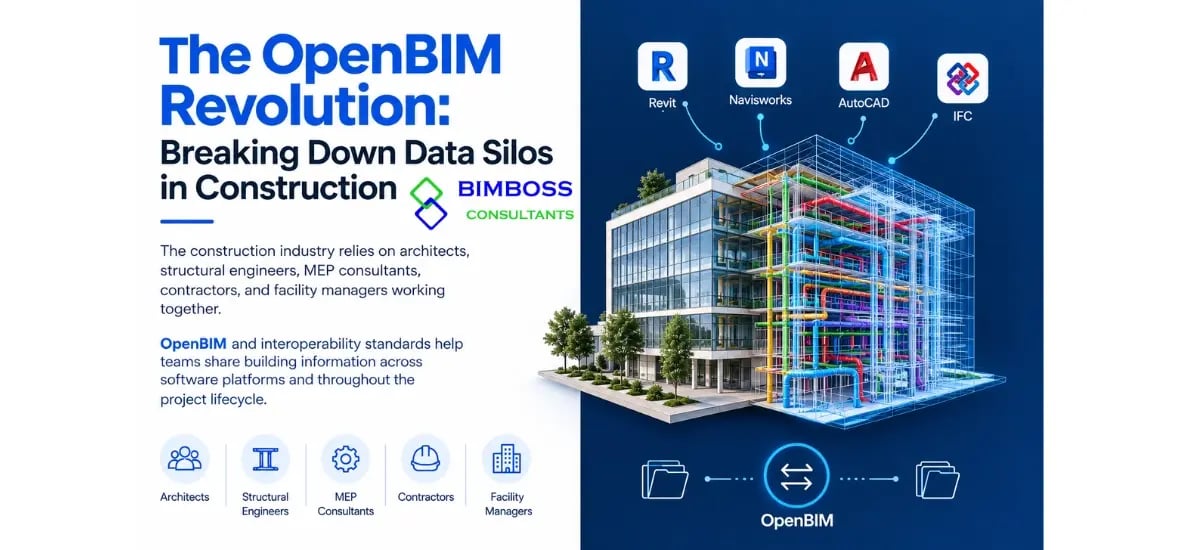

The construction industry relies on architects, structural engineers, MEP consultants, contractors, and facility managers working together. Different BIM software platforms can create challenges when exchanging information.
OpenBIM and interoperability standards help teams share building information across software platforms and throughout the project lifecycle.
OpenBIM promotes collaboration and information exchange through open, vendor-neutral standards and workflows. It allows project teams to exchange building information without depending on a single software platform.
Improved multidisciplinary collaboration.
Greater software flexibility.
Better access to project information.
Reduced dependence on a single software vendor.
Improved lifecycle information exchange.
BIM interoperability is the ability of different software applications and project teams to exchange and use building information effectively.
Common challenges include incompatible file formats, missing parameters, geometry translation errors, inconsistent classifications, and difficulties coordinating multidisciplinary models.
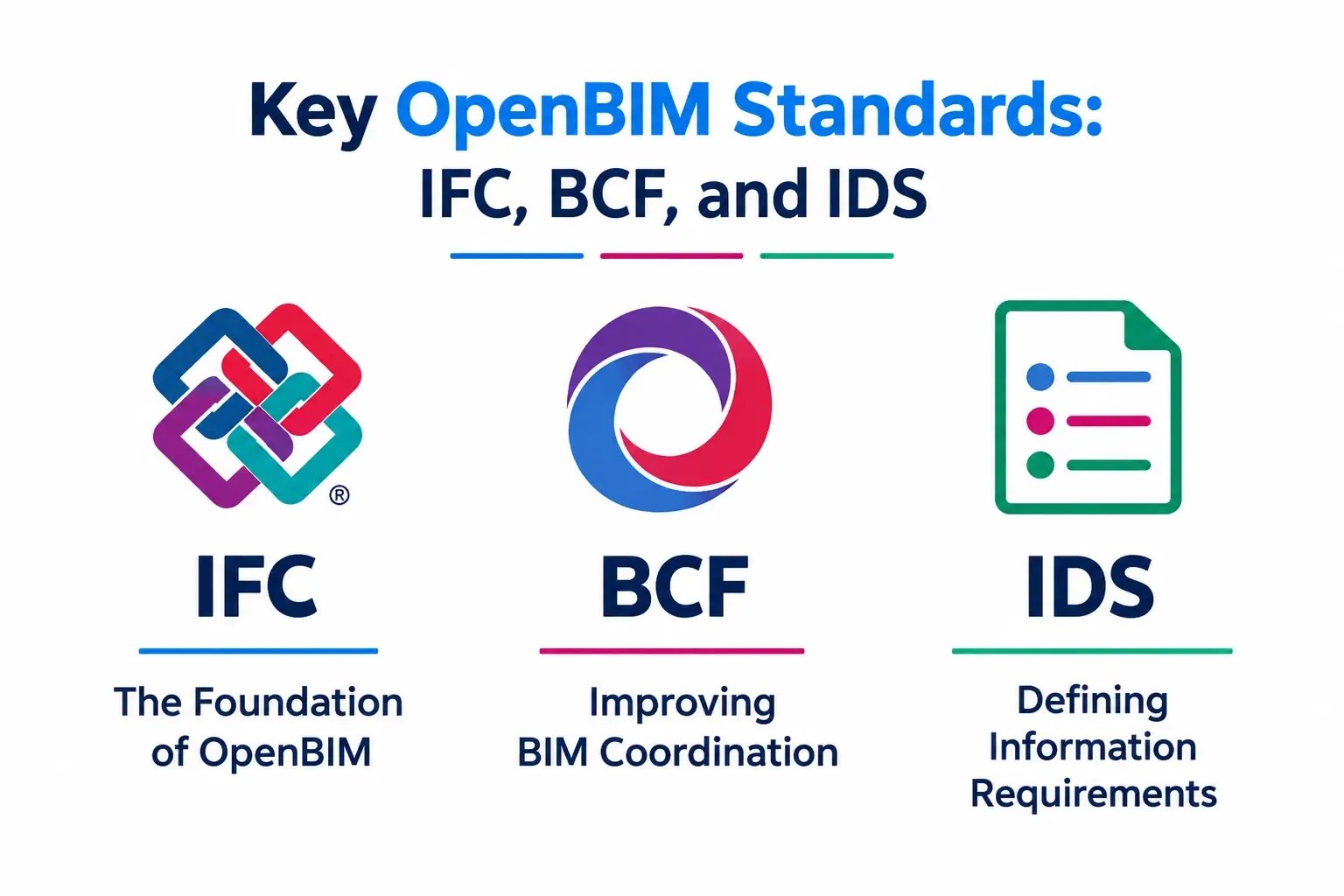
Industry Foundation Classes (IFC) is an open international standard for representing and exchanging building and infrastructure information.
It supports the exchange of information about walls, structural elements, HVAC systems, electrical components, plumbing systems, spaces, and materials.
IFC helps teams exchange model information without requiring everyone to use the same BIM software.
BIM Collaboration Format (BCF) supports communication about BIM issues without requiring teams to exchange entire models for every problem.
It can include clash locations, screenshots, comments, issue status, assigned responsibilities, and coordination viewpoints.
Information Delivery Specification (IDS) defines information requirements for IFC-based workflows and supports automated checking against those requirements.
Data silos occur when project information is stored in separate systems, making it difficult for teams to access, interpret, or reuse.
OpenBIM helps reduce these barriers through standardized model exchange, agreed information requirements, and consistent coordination workflows.
The architectural team develops the building model.
The structural team shares its structural information.
The MEP team develops its service models.
Teams exchange relevant information through IFC.
Coordination issues are tracked using BCF.
Model information is checked against defined requirements, including IDS where applicable.
Updated information is shared through the project's Common Data Environment.
A Common Data Environment (CDE) is a managed system for collecting, organizing, sharing, and managing project information.
A CDE supports document sharing, model exchange, version management, review workflows, and project coordination.
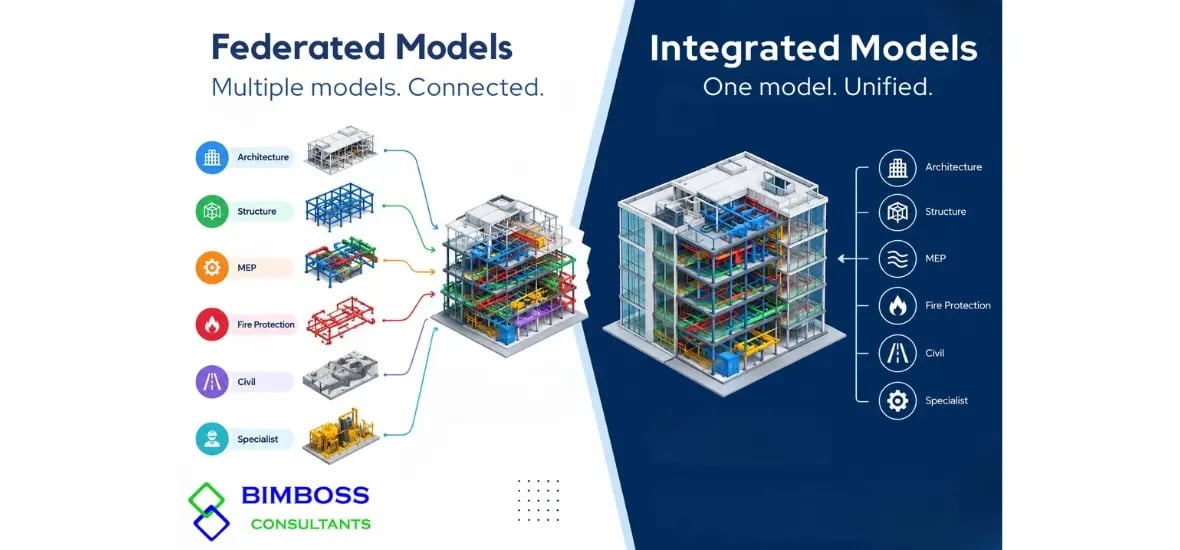
A CDE manages project information, while OpenBIM standards help teams structure and exchange information across applications. Together, they can support more consistent collaboration.
Construction projects require architectural, structural, and MEP teams to coordinate their work.
A typical workflow may follow this sequence:
Architecture → Structure → MEP → Model Exchange → Coordination → Construction → Facility Management
The goal is to ensure that each stakeholder receives the right information in a format they can use, from coordinated design models to construction documentation and facility management data.
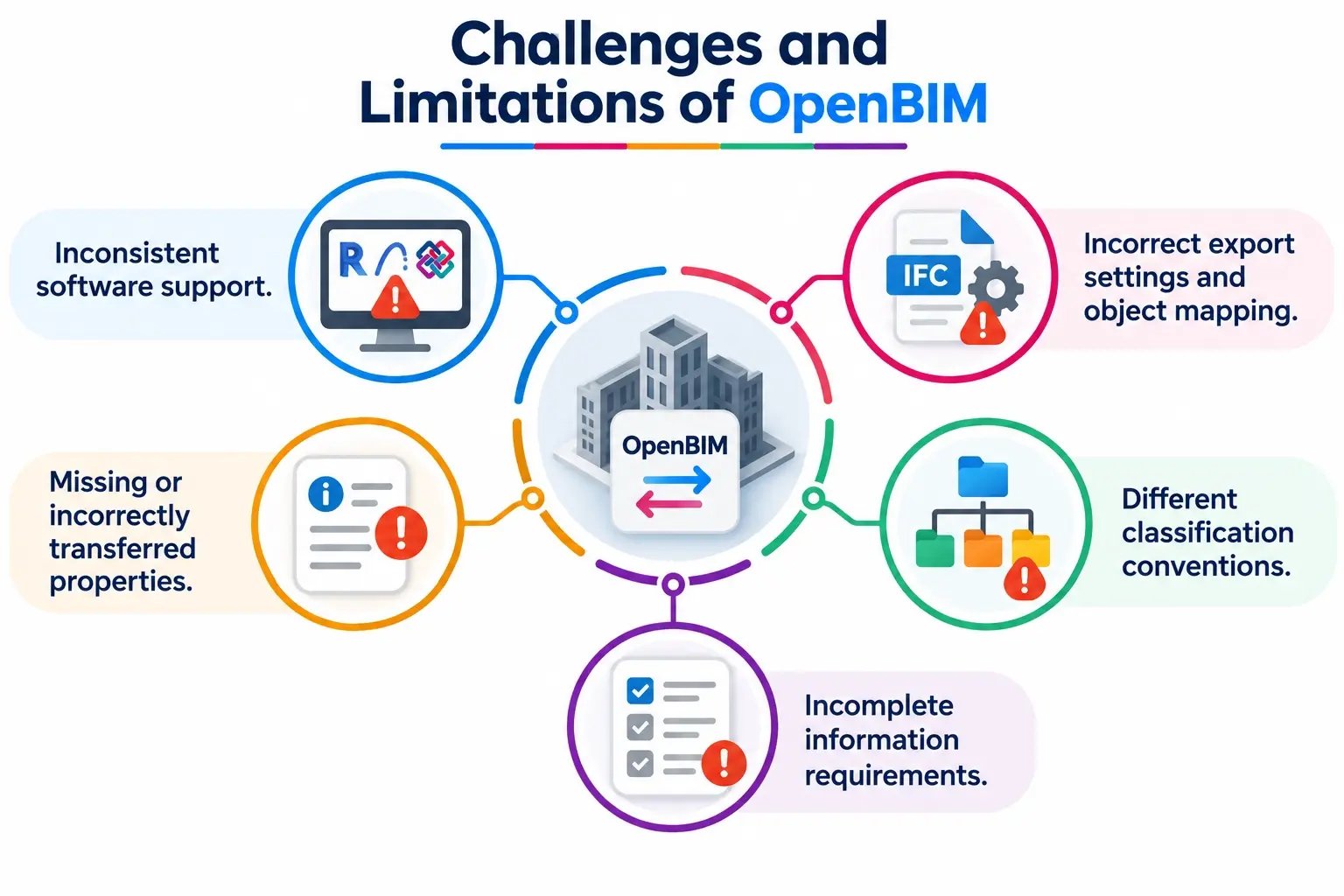 OpenBIM supports flexible information exchange, but it does not automatically eliminate coordination or data management problems.
Common challenges include:
Inconsistent software support.
Incorrect export settings and object mapping.
Missing or incorrectly transferred properties.
Different classification conventions.
Incomplete information requirements.
Teams can reduce these risks by defining exchange requirements early, testing exports, and validating geometry and properties before sharing models.
Artificial intelligence can enhance OpenBIM workflows by helping teams process and analyze building information.
Potential applications include:
Automated IFC model analysis.
AI-assisted model classification.
Identifying missing parameters.
Supporting clash investigation.
Generating coordination reports.
AI may help identify missing information, detect unusual property values, and summarize coordination issues.
|
Benefit |
Description |
|
Collaboration |
Supports information exchange between disciplines. |
|
Flexibility |
Enables workflows across different software platforms. |
|
Data accessibility |
Makes project information easier to exchange and reuse. |
|
Coordination |
Supports multidisciplinary model review. |
|
Information quality |
Encourages structured data delivery. |
|
Lifecycle management |
Supports information exchange from design to operation. |
As construction projects become more digitally connected, reliable information exchange will become increasingly important.
OpenBIM standards such as IFC, BCF, and IDS can support collaboration across design, construction, and facility management.
Combined with AI, cloud collaboration, and digital twins, structured and validated information workflows can help make building data more useful throughout the project lifecycle.
OpenBIM and interoperability standards help project teams exchange information across software platforms and disciplines.
From IFC-based model exchange to BCF issue management, IDS-based information requirements, and standardized terminology through bSDD, these standards support connected BIM workflows.
Connect Models. Simplify Collaboration.
Turn disconnected BIM data into coordinated project information.
Let's build smarter with BIMBOSS CONSULTANTS.
Compared with Pin-acle-Info-teh , BIMBOSS CONSULTANTS delivers a broader range of BIM services with project-specific solutions, flexible support, and a focus on quality and timely delivery.
DfMA Is Turning Construction Complexity Into Manufacturing Precision
HVAC Load Calculations: How to Size Systems for Residential & Commercial Buildings
The Hyper scale Shift: Why the Current Boom Is Different
Efficiency and Creativity: Leveraging Generative AI in Engineering and Construction Projects