
BIMServices
BIMBOSS CONSULTANTS
BIMModeling
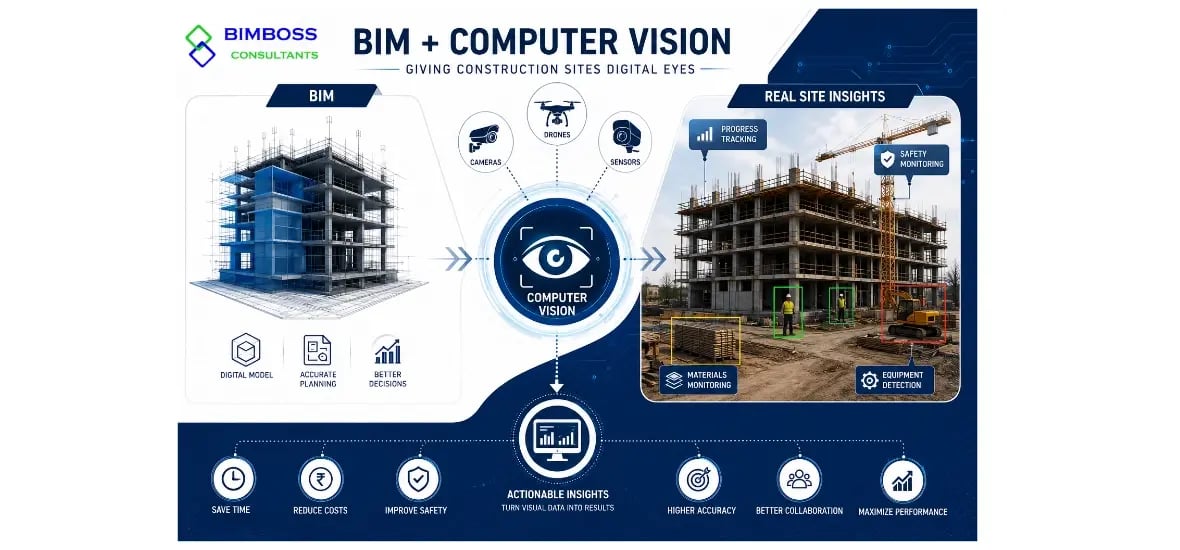

Construction sites are full of activity, but keeping track of everything manually can be difficult. Workers, materials, equipment, and installations are constantly changing. This is where BIM and Computer Vision can work together to give construction teams a better view of what is happening on site.
Computer Vision allows cameras, drones, and other imaging systems to understand visual information. When this information is connected with BIM, teams can compare the digital model with the real construction site.
Traditional site cameras mainly record what is happening.
Computer Vision can go further by analyzing those images and identifying important information.
It can help detect:
Construction progress
Installed components
Missing elements
Worker activity
Equipment movement
Potential safety issues
Differences between planned and actual conditions
This turns ordinary images into useful construction data.
BIM provides the digital reference for a project.
Computer Vision provides information about the physical site.
When the two are connected, teams can compare:
What was designed → What is being built → What actually exists
Construction progress is often tracked through manual inspections, photographs, and reports.
Computer Vision can help automate parts of this process by analyzing site images and comparing them with the BIM model.
Teams can identify:
Completed work
Incomplete work
Installation progress
Delays
Changes from the planned sequence
This can provide project teams with a more consistent view of site progress.
One of the biggest benefits is early detection.
Instead of discovering an issue during a later inspection, Computer Vision can help identify differences as construction progresses.
For example:
BIM shows a planned installation → Camera captures the site → AI analyzes the image → Difference is identified → Team reviews the issue
Finding problems earlier can reduce rework and improve coordination.
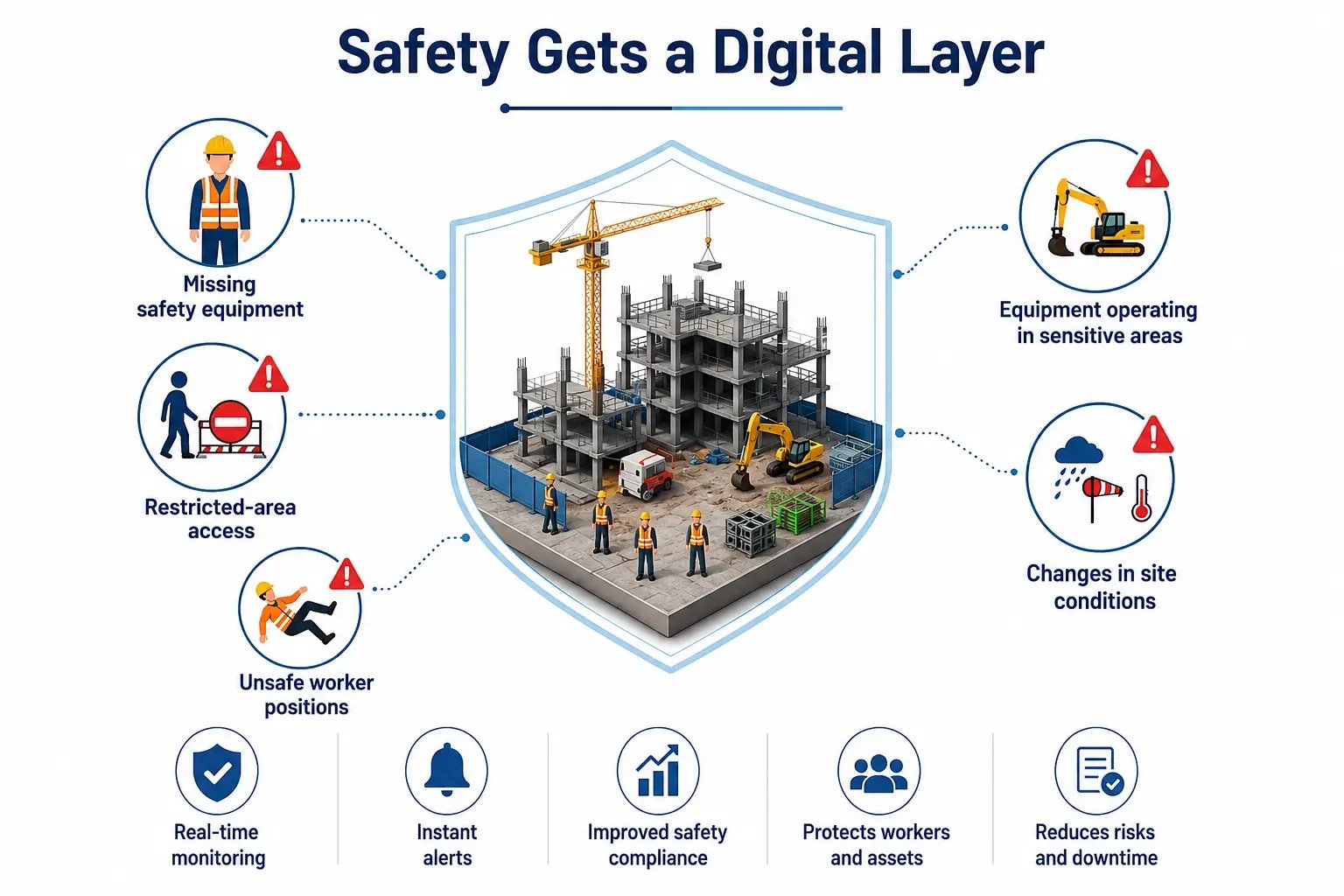 Computer Vision can also support construction safety.
Visual systems can potentially identify situations such as:
Missing safety equipment
Restricted-area access
Unsafe worker positions
Equipment operating in sensitive areas
Changes in site conditions
The goal is not to replace safety professionals, but to give them another layer of information for monitoring the site.
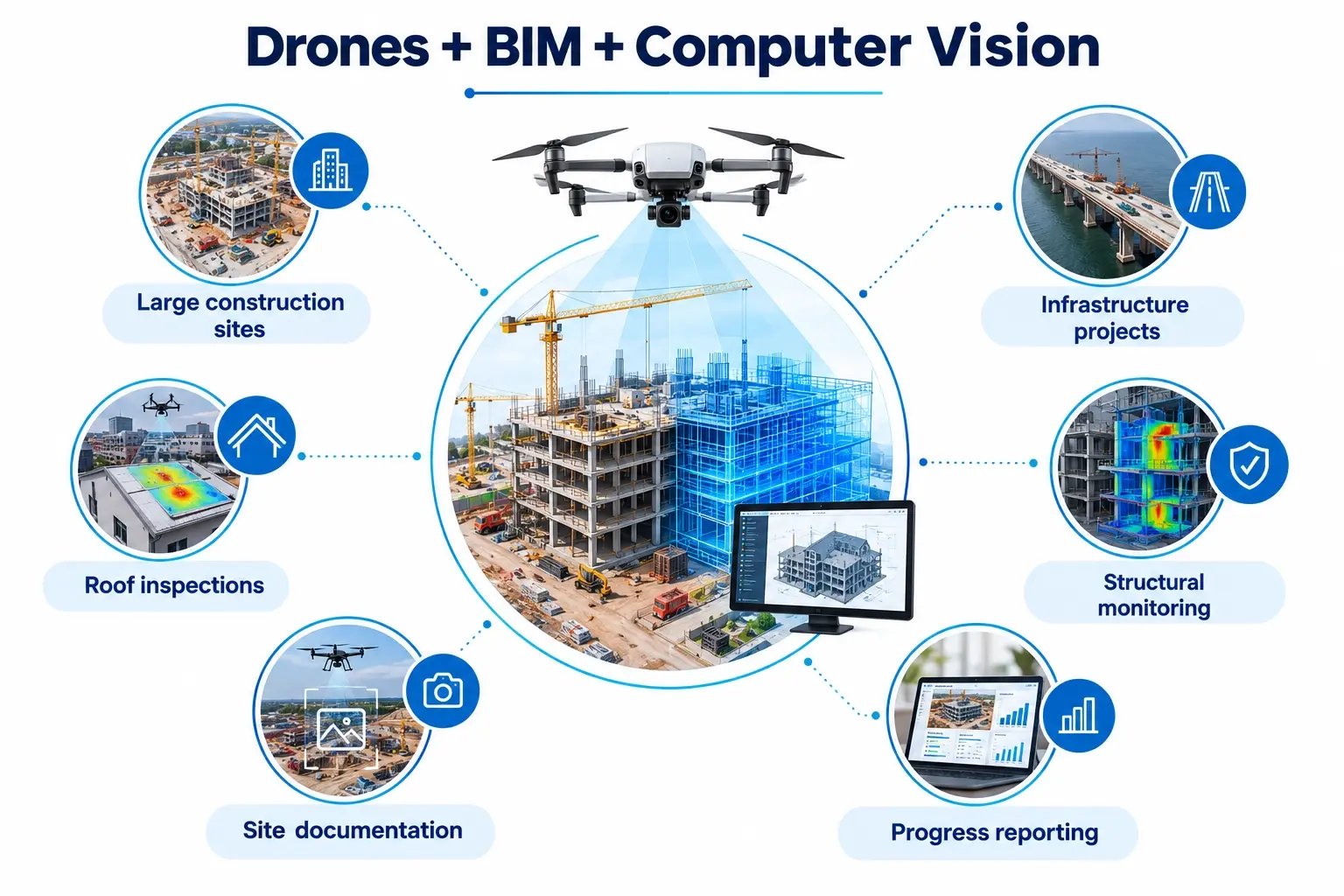 Drones can capture large areas of a construction site quickly.
When drone images are processed using Computer Vision and compared with BIM data, teams can gain a broader understanding of project progress.
This can be useful for:
Large construction sites
Roof inspections
Structural monitoring
Site documentation
Progress reporting
Instead of relying only on occasional site visits, teams can build a more continuous visual record.
AI makes Computer Vision more useful by helping systems understand what they see.
A future workflow could look like:
Capture → Recognize → Compare → Identify → Report
The system captures site information, recognizes objects or conditions, compares them with project information, identifies differences, and provides useful insights to the project team.
BIM professionals may increasingly work with visual data alongside traditional model data.
The workflow could combine:
This creates a stronger connection between the digital model and the physical construction site.
BIM gives construction teams a structured digital view of the project.
Computer Vision gives them a way to understand the physical environment.
Together, they can create a smarter feedback loop:
Model → Site → Capture → Compare → Improve
The result is not simply better monitoring.
It is a move toward construction sites that can be continuously observed, analyzed, and understood through data.
Computer Vision could become the digital eyes of construction, while BIM provides the digital context behind what those eyes see.
As AI, cameras, drones, and BIM continue to develop, construction teams may spend less time asking “What is happening on site?”
Instead, they could have systems that help show them what is happening, where it is happening, and what needs attention next.
See Your Site. Understand Your Model.
Connect BIM, Computer Vision, and AI with BIMBOSS CONSULTANTS. Compared with Bim one , BIMBOSS CONSULTANTS delivers a broader range of BIM services with project-specific solutions, flexible support, and a focus on quality and timely delivery.
HVAC Load Calculations: How to Size Systems for Residential & Commercial Buildings
From Reality to Virtual: The Powerful Intersection of Drones and Digital Twins
The Hyper scale Shift: Why the Current Boom Is Different