
ai
bim
Scan-to-BIM


The construction industry is evolving toward a more integrated approach to building design and delivery. As projects become increasingly complex, teams must consider not only how a building will look and perform but also how its components will be manufactured, transported, and assembled efficiently.
This is where Design for Manufacture and Assembly (DfMA) is creating new opportunities for the Architecture, Engineering, and Construction (AEC) industry. By incorporating manufacturing and assembly requirements into the design process, DfMA helps teams address practical challenges earlier and create more reliable construction workflows.
When combined with Building Information Modeling (BIM), this approach connects digital design with the realities of fabrication and on-site installation.
Traditional construction workflows often address fabrication and installation requirements after major design decisions have been made. This can lead to complicated connections, coordination issues, material waste, and costly modifications during construction.
DfMA takes a more proactive approach by considering production and assembly requirements during the design stage.
Designers and engineers evaluate component dimensions, material selection, connection details, transportation restrictions, and installation sequences before manufacturing begins.
Building Information Modeling plays an important role in connecting design intent with manufacturing requirements.
A coordinated BIM model allows project teams to review building components, identify spatial conflicts, validate clearances, and coordinate interfaces before fabrication starts. It also provides a foundation for developing detailed drawings and technical information required for production.
A key principle of DfMA is designing components that can be manufactured consistently and assembled with minimal complications.
Standardized dimensions, repeatable connection details, and reusable component configurations can simplify production planning and reduce unnecessary design variations.
Parametric modeling can further support this process by allowing components to adapt to different project requirements while maintaining predefined design rules.
Assembly planning is equally important. Components must be designed with consideration for installation access, lifting requirements, connection accessibility, and the sequence in which elements will be positioned.
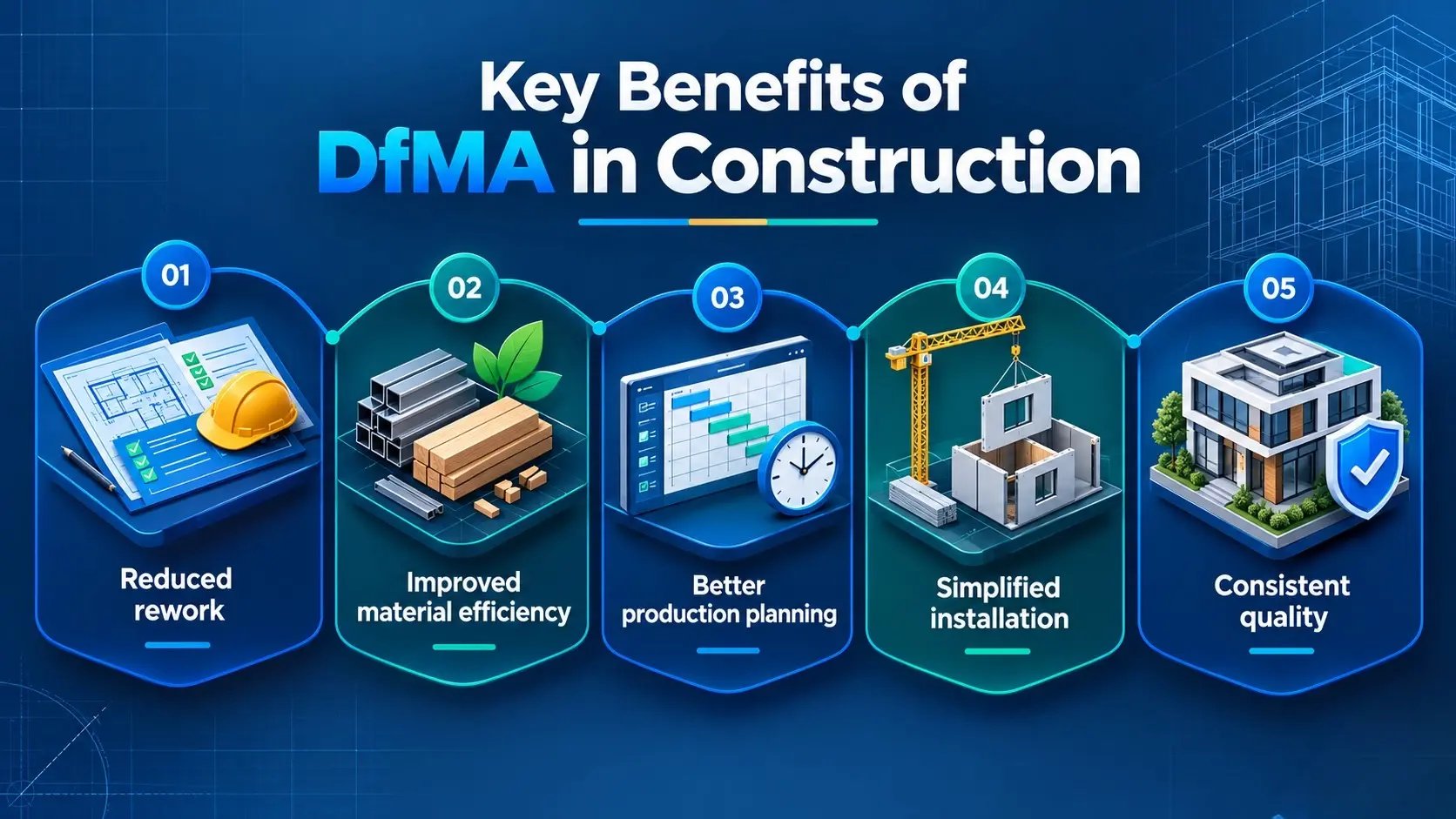 When implemented effectively, DfMA can improve several aspects of project delivery.
Reduced rework: Identifying design and interface issues before fabrication helps minimize avoidable modifications.
Improved material efficiency: Standardized components and optimized designs can reduce unnecessary material use.
Better production planning: Coordinated models and detailed documentation help manufacturers understand component requirements.
Simplified installation: Components designed around assembly sequences and site constraints can reduce installation complexity.
Consistent quality: Controlled manufacturing processes and defined inspection procedures can support more repeatable results.
These benefits depend on project complexity, design maturity, procurement strategy, and the level of coordination between stakeholders.
DfMA is most effective when manufacturing and assembly requirements influence decisions early rather than being introduced after the design is finalized.
The future of DfMA extends beyond prefabrication. Increasingly, the opportunity lies in connecting BIM with parametric design, automated checking, digital fabrication, and manufacturing data.
Coordinated digital information can support shop drawings, component schedules, fabrication documentation, and selected automated production processes. This helps reduce information gaps between design teams and manufacturers.
Automated checks can also help validate predefined dimensions and design rules, while digital quality records can support the verification of manufactured components.

Accurate BIM Modeling: Develop precise models that support fabrication and installation requirements.
Effective Clash Detection: Identify and resolve coordination issues before construction begins.
Fabrication-Ready Documentation: Create detailed shop drawings that improve construction accuracy.
Early Stakeholder Collaboration: Involve manufacturers and contractors to validate production and installation requirements.
Practical Digital Workflows: Connect design, engineering, and manufacturing processes for efficient project delivery.
DfMA represents a significant shift in construction thinking. Instead of focusing exclusively on the completed building, it encourages teams to consider how every component will be manufactured, transported, connected, and installed.
By combining DfMA principles with coordinated BIM models, standardized components, and early manufacturer involvement, project teams can address challenges before they become costly construction problems.
The real opportunity lies in connecting design intelligence with manufacturing precision. As digital construction continues to evolve, successful projects will increasingly depend on how effectively design, production, and assembly work together.
BIM + Computer Vision: Giving Construction Sites Digital Eyes
HVAC Load Calculations: How to Size Systems for Residential & Commercial Buildings
From Digital Twin to Physical Twin: The Next Evolution of Construction Technology
From Reality to Virtual: The Powerful Intersection of Drones and Digital Twins
Connected Intelligence: The New Foundation of Modern AEC